
Last updated November 23, 2026
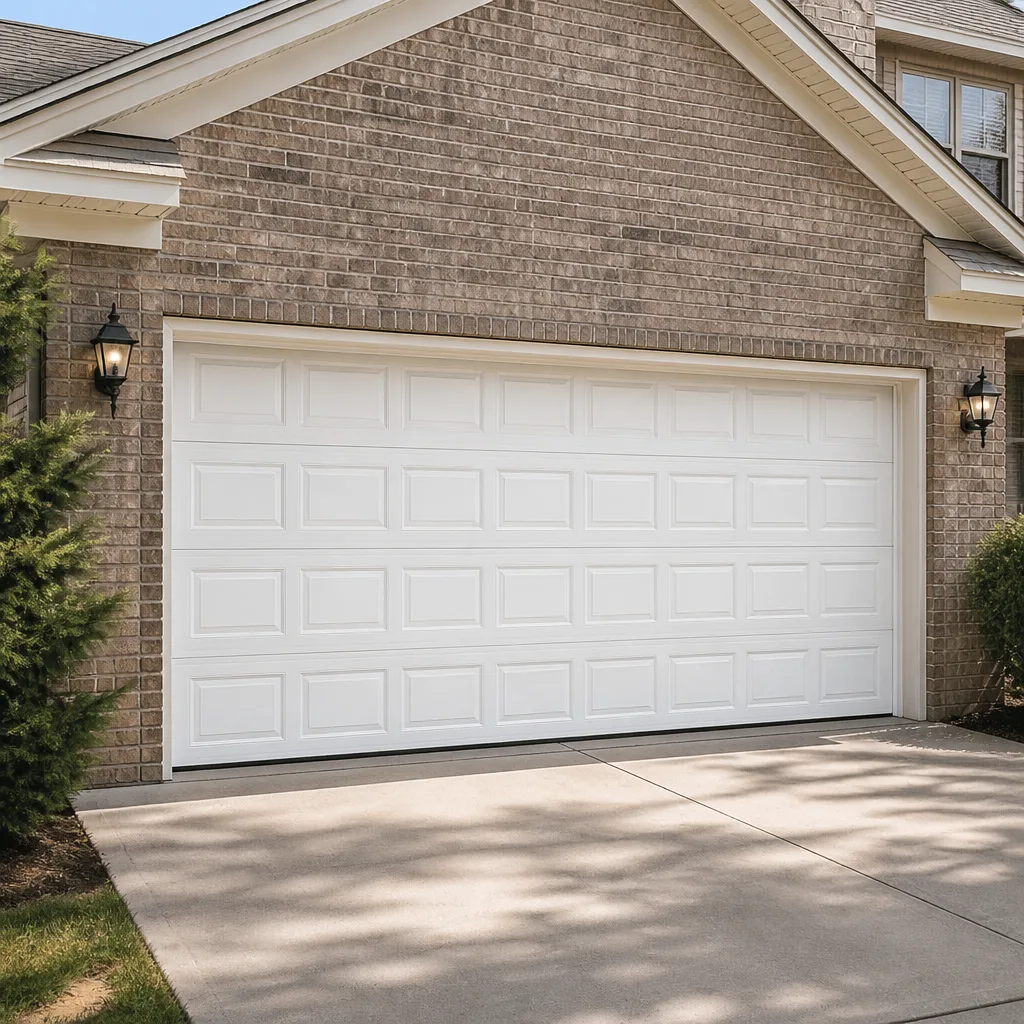 Raised-panel steel
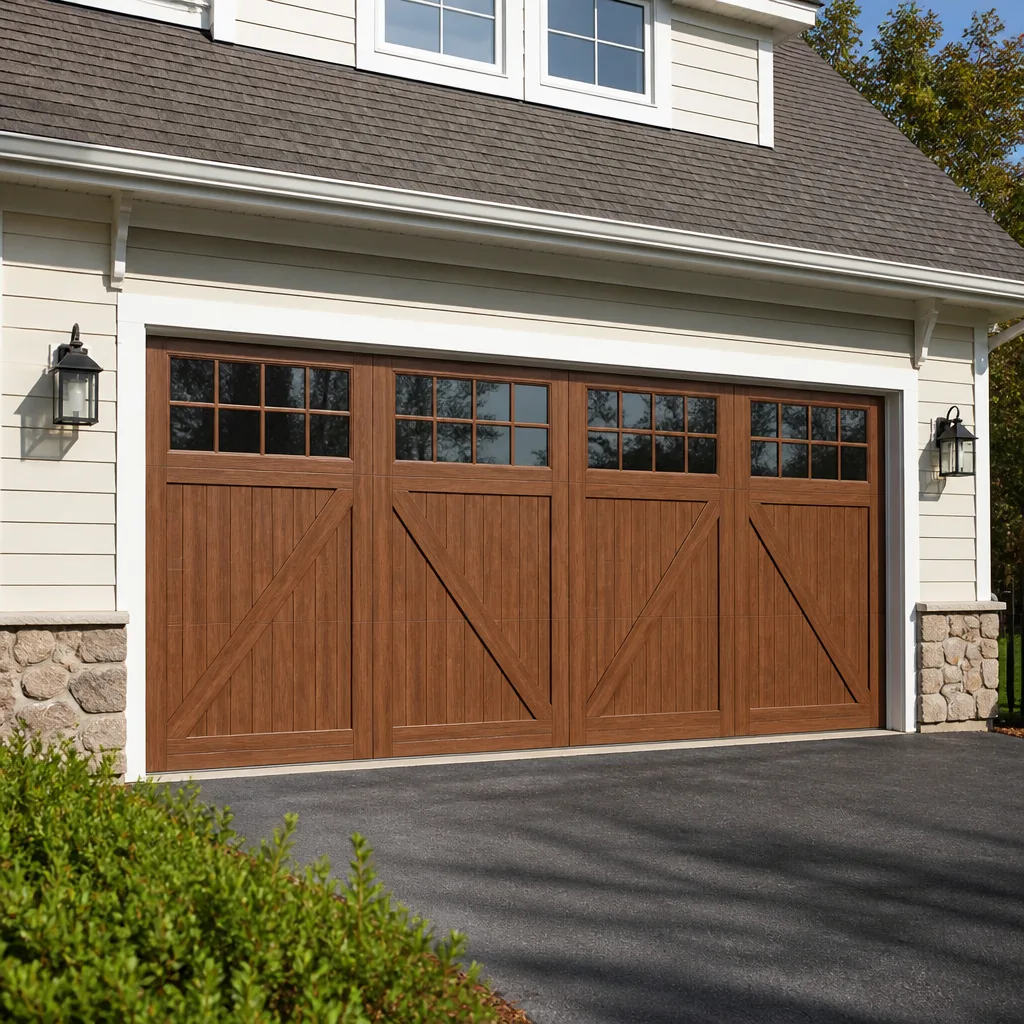 Carriage house
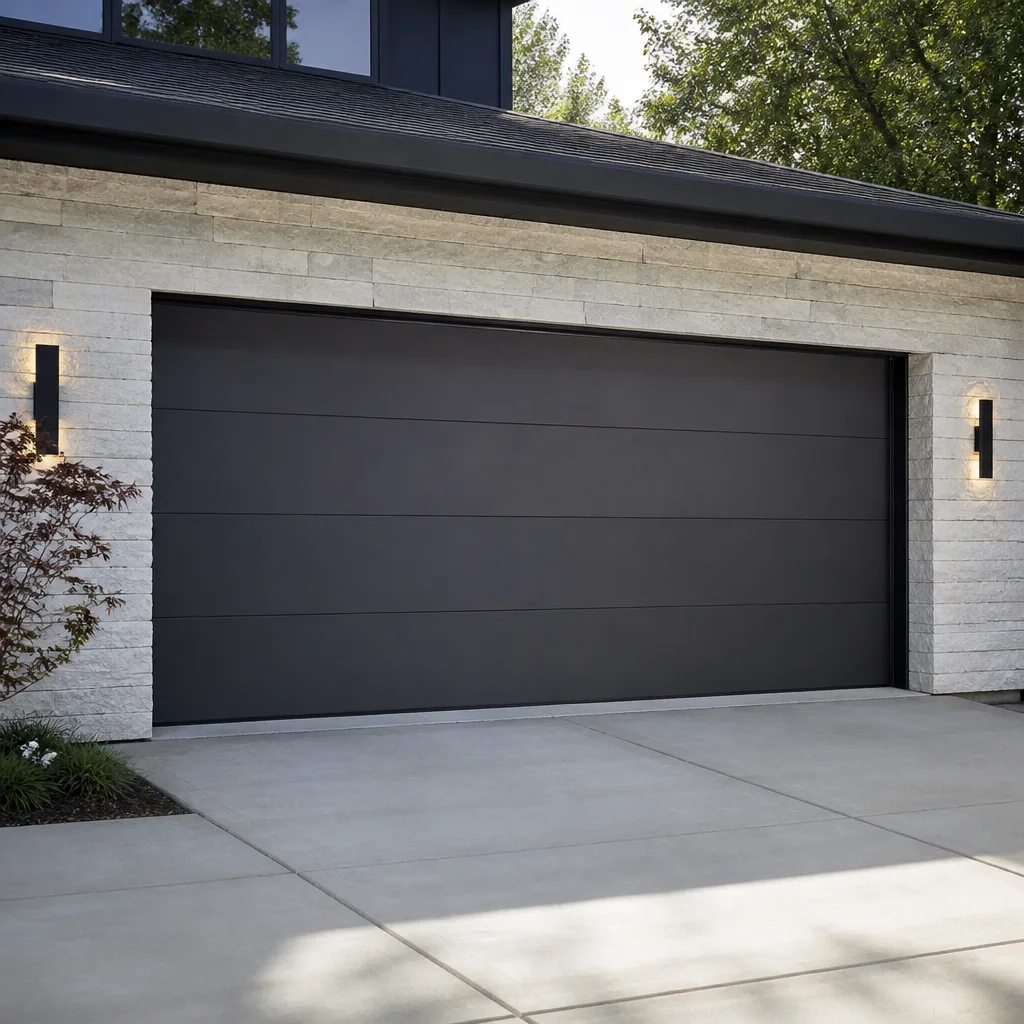 Modern flush
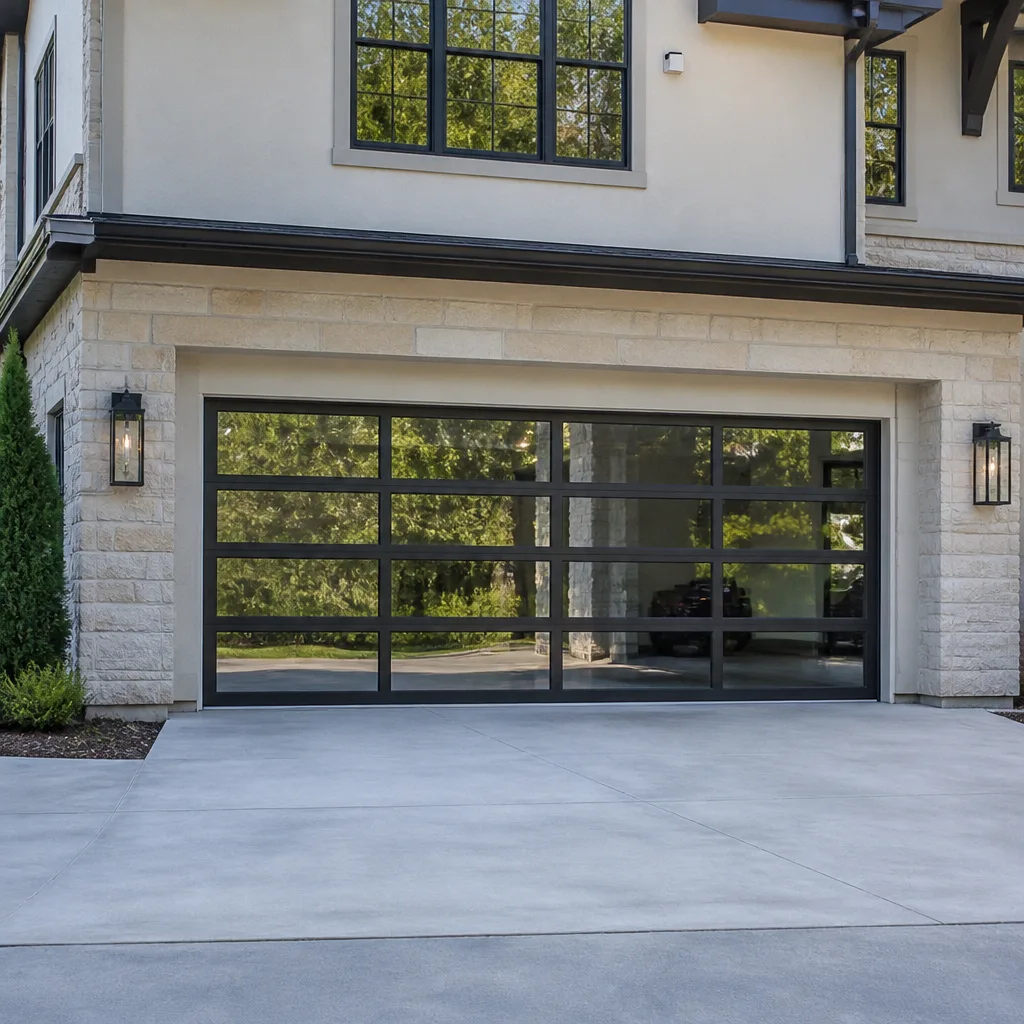 Full-view glass
 LiftMaster openers
 Chamberlain openers
Full 25-point door and opener safety check with every visit - springs, cables, rollers, tracks, and your LiftMaster or Chamberlain opener included
You get a price before we start. It does not change when the pro arrives.
Get your free estimateSeasonal Garage Door Care for Ashburn: Year-Round Homeowner’s Guide
The busiest stretch for garage door repair calls in Northern Virginia isn’t summer or a storm week. It’s the first hard freeze of November, and the reason surprises most homeowners: nothing was wrong with the door in October. Summer humidity swelled the wood panels, damp air left the hinges and rollers dry and starting to rust, and nobody touched any of it since spring. Then the temperature drops twenty degrees in a night and every moving part that needed lubrication starts grinding at once.
Garage doors don’t fail on a calendar schedule. They fail when the season changes and the hardware can’t keep up. This guide walks through what actually happens to a door in Ashburn across all four seasons, which tasks prevent which failures, and the single annual check that heads off most emergency calls before they start. Twenty minutes a few times a year is the whole ask.
Quick Answer
Seasonal garage door care in Ashburn comes down to four things tied to the local climate: lubricate and torque hardware before the first freeze, keep the bottom seal from freezing to the concrete in winter, check spring tension and weatherstripping after the spring temperature swings, and manage humidity-driven swelling on wood doors in summer. A full hardware torque check once a year prevents the majority of emergency service calls we handle, because most failures trace back to a loose bolt or a dry hinge, not a worn-out door.
Styles & brands we work with
- Raised-panel steel
- Carriage house
- Modern flush
- Full-view glass
- LiftMaster openers
- Chamberlain openers
Table of Contents
- Why Ashburn’s Climate Is Hard on Garage Doors
- Fall: Lubricate and Torque Before the First Freeze
- Winter: Frozen Seals and Doors That Won’t Lift
- Spring: Spring Tension and Weatherstripping Checks
- Summer: How Humidity Treats Wood, Steel, and Fiberglass
- The One Annual Task That Prevents Most Emergency Calls
- Your Four-Season Checklist at a Glance
Why Ashburn’s Climate Is Hard on Garage Doors
Ashburn sits in a climate band that gives a garage door a genuine workout every year. Winters bring real freezes, not the mild dips you get further south. Summers run hot and humid enough that an unconditioned garage holds moisture for weeks. And spring delivers fast temperature swings, sometimes thirty degrees in a day, that make metal expand and contract repeatedly before things settle.
Each of those seasons stresses a different part of the door. Cold stiffens lubricant and shrinks seals. Heat and humidity swell wood and warp thin panels. Rapid swings work bolts loose and cycle springs harder than steady temperatures do. A door in a milder climate might coast for years on the same maintenance. A door in Ashburn feels all of it, every year, and the wear compounds if nothing gets checked between seasons.
The garage itself makes it worse. Most Ashburn garages are unconditioned, so the door and its hardware sit at whatever the outside air is doing. That means the springs, hinges, rollers, and seals all move through the full temperature range rather than staying in a stable interior. It’s not that Ashburn doors are fragile. It’s that they live in a place that asks more of them, and a little seasonal attention goes a long way.
Housing stock matters too. Neighborhoods across Ashburn mix older wood-panel doors with newer steel and composite builds, and each material reacts to the local humidity differently. A wood door in Broadlands and a steel door in Brambleton need different seasonal tasks even though they sit a few miles apart. The rest of this guide covers those differences season by season, and when a job crosses into garage door repair rather than routine care, we’ll point that out.
Fall: Lubricate and Torque Before the First Freeze
Fall is the most important maintenance window of the year in Ashburn, and the task that matters most is re-lubricating every moving part before temperatures drop below freezing. The reason is mechanical: standard light grease thickens as it gets cold. A hinge that glides at 60°F can drag at 25°F, and that drag loads the opener and the springs. Lubricating in October, while the garage is still warm, means the grease is in place and working before the cold arrives.
What to use matters. For sub-30°F conditions, a low-viscosity lubricant that stays fluid in the cold is the right call. Heavy axle grease or WD-40 alone won’t hold up. A silicone-based or lithium spray rated for cold temperatures reaches into the hinge knuckles and roller bearings and keeps them moving when the mercury drops. We work on LiftMaster and Craftsman opener systems specifically, and the same principle applies across brands: cold makes a marginal part fail first.
Here’s the fall sequence we recommend:
- Spray lubricant into every hinge knuckle, roller bearing, and the torsion or extension spring coils (light coat only on springs, not soaking).
- Wipe down the tracks with a damp cloth, then leave them dry. Grease on the tracks attracts grit and causes stuttering.
- Check the bottom seal for cracks or stiff spots. Cold makes brittle rubber crack faster.
- Torque every bolt on the hinges, brackets, and track mounts with a socket set. Hand-tight isn’t tight enough after a summer of vibration.
- Test the door’s balance by disconnecting the opener and lifting it halfway. It should stay put. If it drops or rises on its own, the springs need attention.
Do this before the first hard freeze and you’ll head off the November rush entirely. If the door already grinds or jerks when it moves, that’s a sign the hardware is past lubrication and into repair territory. Fall is also a good time to look at whether the door itself is nearing the end of its life, which we cover under garage door installation.
Winter: Frozen Seals and Doors That Won’t Lift
The single most common winter emergency call we get in Ashburn is a door that won’t lift because the bottom seal has frozen to the concrete. It happens when meltwater runs under the door, refreezes overnight, and bonds the rubber seal to the slab. The opener strains, the safety reverse kicks in, and the door stays shut. It’s not a broken door. It’s a door glued to the floor by ice.
Preventing it is straightforward. Before winter, check that the bottom seal makes full contact with the floor without pressing hard. If there’s a gap, cold air and water get under it. If it’s compressed flat, it can’t seal at all. Some homeowners use a light application of silicone spray on the seal face to reduce sticking, though the real fix is a seal that’s in good shape to begin with. If yours is cracked or hardened, replacing it before the freeze is cheaper than an emergency call.
When the door won’t lift on a cold morning, the safe move is to stop pulling on it. Forcing a frozen door can strip the opener gear or damage the springs. Break the ice bond gently with warm (not boiling) water along the seal, and never use a shovel or hammer to chip it free. If the door still won’t move after the ice is cleared, something else is wrong and it’s time to call.
Winter is also when cold-stiffened lubricant and contracted metal reveal weak points. Bolts that were snug in October can loosen as the door cycles through freeze-thaw. If you hear a new rattle or the door jerks on the way up, that’s the hardware talking. We answer 24/7 for winter calls, and fast dispatch from 7am to 7pm gets a technician out to Ashburn when the door fails.
Spring: Spring Tension and Weatherstripping Checks
Spring is when the damage from winter shows up. The contraction-expansion cycling of a Virginia winter works springs harder than steady cold does, and a torsion spring that was fine in December may have lost tension by March. You’ll notice it as a door that feels heavier than it used to, or one that only opens partway before the opener gives up. That’s a tension problem, not an opener problem, and it’s worth checking every spring.
Testing spring tension safely means disconnecting the opener and lifting the door by hand to about waist height. A properly balanced door stays where you leave it. A door that drops means the springs have lost their lift. What you should not do is adjust the springs yourself. Torsion springs hold serious stored energy, and a spring that lets go while someone is turning it can cause severe injury. That’s why spring replacement is one of the most dangerous DIY repairs and why we treat it as a core service handled by specialists rather than a side job.
Spring is also the time to inspect weatherstripping for winter compression damage. The seals around the sides and top of the door take the brunt of cold and ice, and by spring they can be flattened, torn, or pulled loose. Walk the perimeter and check three things:
- Bottom seal: look for cracks, tears, or sections that no longer touch the floor.
- Side and top weatherstripping: check for gaps, hardened rubber, or pieces hanging loose.
- Threshold: make sure the concrete under the door is intact, not crumbled or holding standing water.
Replacing worn weatherstripping is one of the cheaper jobs that protects the door and the garage interior. It also keeps pests and drafts out through the warmer months. If the spring check turns up a tension problem, that’s a repair best handled by specialists, and we’re glad to take a look.
Summer: How Humidity Treats Wood, Steel, and Fiberglass
Ashburn’s summer humidity is the season’s main event for a garage door, and how it affects yours depends entirely on what the door is made of. Wood, steel, and fiberglass each handle moisture differently, and knowing which one you have tells you what to watch for between June and September.
Wood doors are the most humidity-sensitive. Wood absorbs moisture and swells, which can bind the door in its frame, make panels stick, and stress the joints. The question is whether the swelling is cosmetic or structural. Cosmetic swelling shows up as a slightly tight fit or minor surface movement that settles when the air dries. Structural swelling means the door no longer closes flush, panels have separated at the seams, or the frame itself has warped enough to bind. If the door only sticks on humid days and frees up when it’s dry, it’s cosmetic. If it sticks in dry weather too, the door has moved for good and needs professional attention.
Steel doors don’t swell, but humidity finds seams and scratch points where the paint has worn. Moisture gets behind the finish and starts corrosion from the inside, which spreads under the paint before you see it. A yearly inspection of the bottom edge and panel seams catches it early. One touch of rust on the surface is easy to treat. Rust creeping along a seam is a replacement conversation.
Fiberglass and composite doors handle humidity best, but they’re not immune. The panels hold up, but the frame and hardware around them still collect moisture, and the finish can chalk or fade over a few summers. Washing the surface and checking the hardware seasonally keeps them looking and working right.
Whatever the material, summer is when humidity and heat combine to test the finish and the hardware. A door that’s been neglected all summer shows up as the November problem. Get ahead of it by checking now.
The One Annual Task That Prevents Most Emergency Calls
If you do one thing all year, make it a full hardware torque check with a socket set. In our experience, the majority of emergency service calls trace back to something that came loose, dried out, or worked its way out of adjustment, not to a door that suddenly wore out. A door is a machine made of dozens of bolts, brackets, and fasteners, and every time it opens and closes, vibration works them a little looser. A torque check finds those before they cause a failure.
Here’s how to do it:
- With the door closed, walk the full width and check every hinge bolt, bracket bolt, and track mount with a socket set. Snug them down, don’t overtighten.
- Inspect the roller stems and their brackets; a roller that wobbles in its bracket is on its way out.
- Check the track mounts top to bottom. A track that’s come loose will pull the door out of alignment.
- Look at the opener’s rail and the bracket where it attaches to the door. Vibration loosens these too.
- Test the balance again with the opener disconnected. If it’s not staying put, the springs are involved and that’s a professional job.
Twenty minutes with a socket set once a year, ideally in fall before the cold, catches the loose bolts and dry hinges that turn into emergencies. It’s the highest-value maintenance on the whole list, and it doesn’t require any special tools beyond what’s already in most garages.
Your opener deserves the same attention. Modern systems from LiftMaster and Chamberlain run on Wi-Fi and app integration, and a loose bracket or worn gear shows up as connectivity glitches or a door that stops partway. We handle garage door opener repair across those brands, and a quick check now beats a dead opener later.
Your Four-Season Checklist at a Glance
Here’s the whole year in one place. Print it, tape it to the garage wall, and check off each season. The tasks repeat because the seasons do, and the door benefits most from consistent attention rather than a single big effort.
- Fall: spray cold-rated lubricant on hinges, rollers, and springs; wipe down and dry the tracks; check the bottom seal; torque every bolt; test the door’s balance.
- Winter: keep the bottom seal clear of ice; check for freeze-bonding after snow or rain; listen for new rattles from contracted hardware; clear snow and ice from the threshold.
- Spring: test spring tension by feel; inspect weatherstripping for compression damage; check the threshold for water damage; look for panels that shifted over winter.
- Summer: inspect wood panels for swelling; check steel seams for rust; wash and check the finish on fiberglass and composite; keep hardware dry and lubricated.
Mid-Atlantic homeowners often ask whether a door needs more than this. Usually it doesn’t. The trick is doing the seasonal tasks on time, especially the fall lubrication and the annual torque check, because those two prevent the most expensive failures. When a season’s check turns up something you can’t safely fix, that’s what we’re here for.
Ashburn is an active place, and the door is the thing your household relies on most without thinking about it. Keeping it in service through every season means no surprise morning when it won’t open. If you’d rather have a specialist do the seasonal check, or you’ve found a problem this guide flags, we’re one call away.
Common Mistakes to Avoid
- Lubricating with the wrong product. Standard grease thickens in the cold and leaves hinges dragging in February. Use a cold-rated lubricant, especially before winter.
- Greasing the tracks. Many homeowners spray grease on the tracks thinking it helps. It attracts grit, causes stuttering, and wears the rollers faster. Tracks should be clean and dry.
- Ignoring the bottom seal. A cracked or compressed seal is the leading cause of frozen-to-the-floor winter calls in Ashburn. Replace it before the freeze, not after.
- Forcing a stuck door. Pulling hard on a frozen or jammed door strips opener gears and can damage springs. Stop and find out why it’s stuck.
- Adjusting springs yourself. Torsion springs store dangerous energy. A spring that releases while you’re working on it can cause serious injury. Leave spring work to professionals.
- Skipping the annual torque check. Loose hardware is the root of most emergencies. Twenty minutes with a socket set once a year prevents a lot of them.
- Assuming a wood door’s swelling is just cosmetic. Minor swelling that settles in dry weather is harmless. A door that sticks year-round has moved structurally and needs a pro.
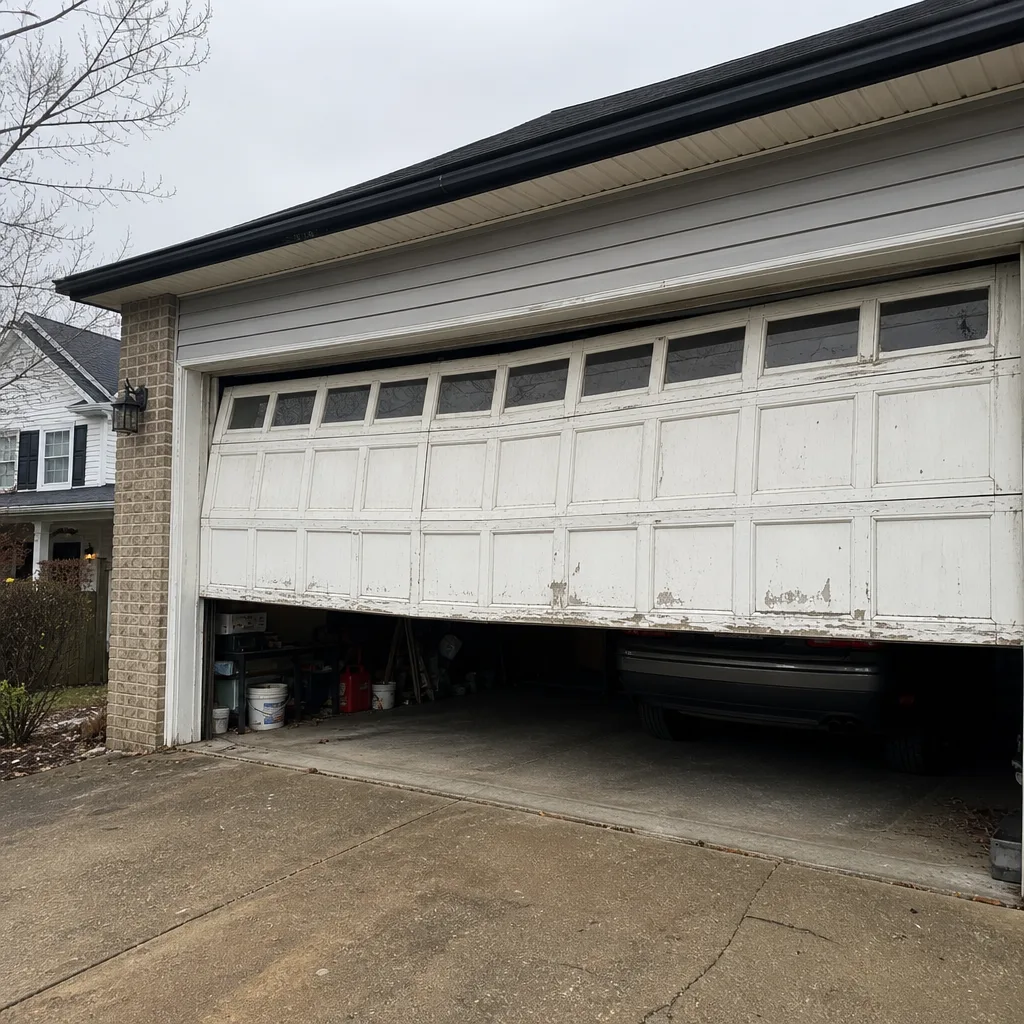
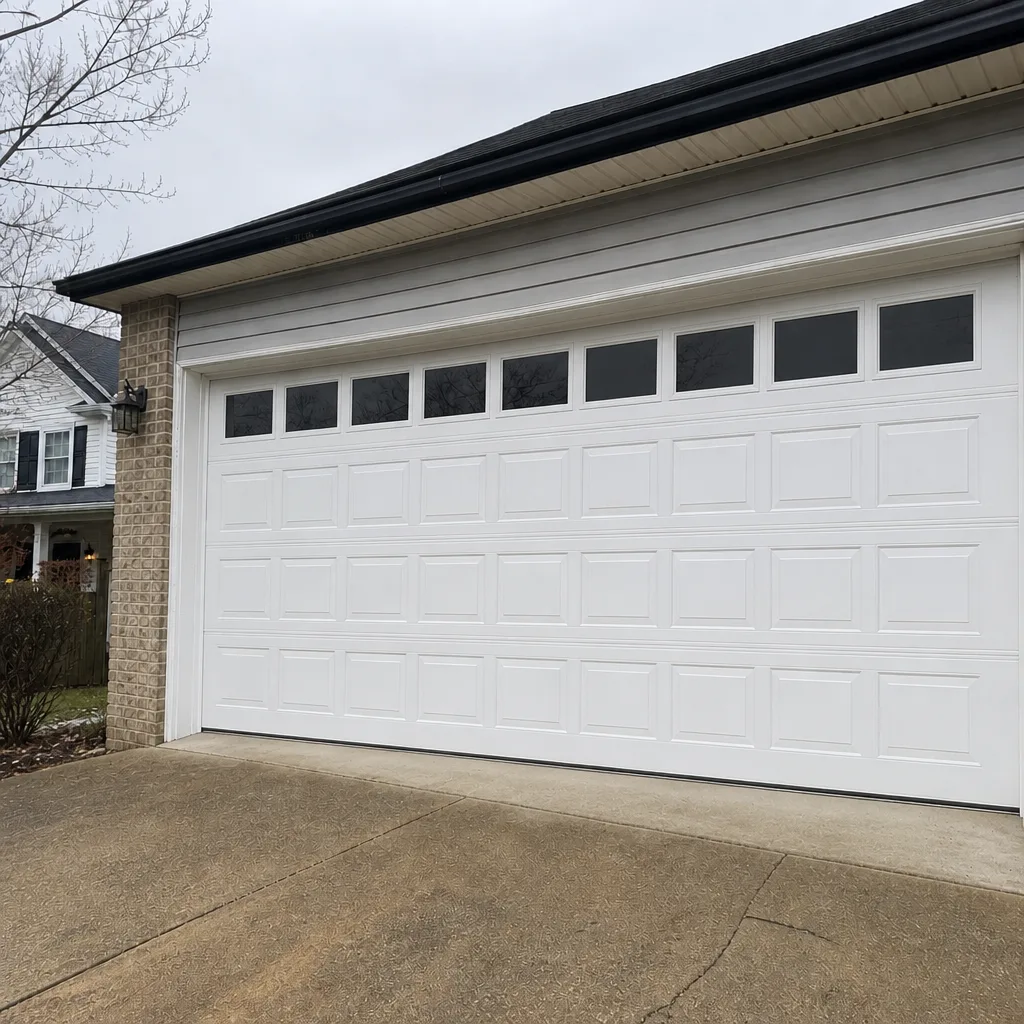
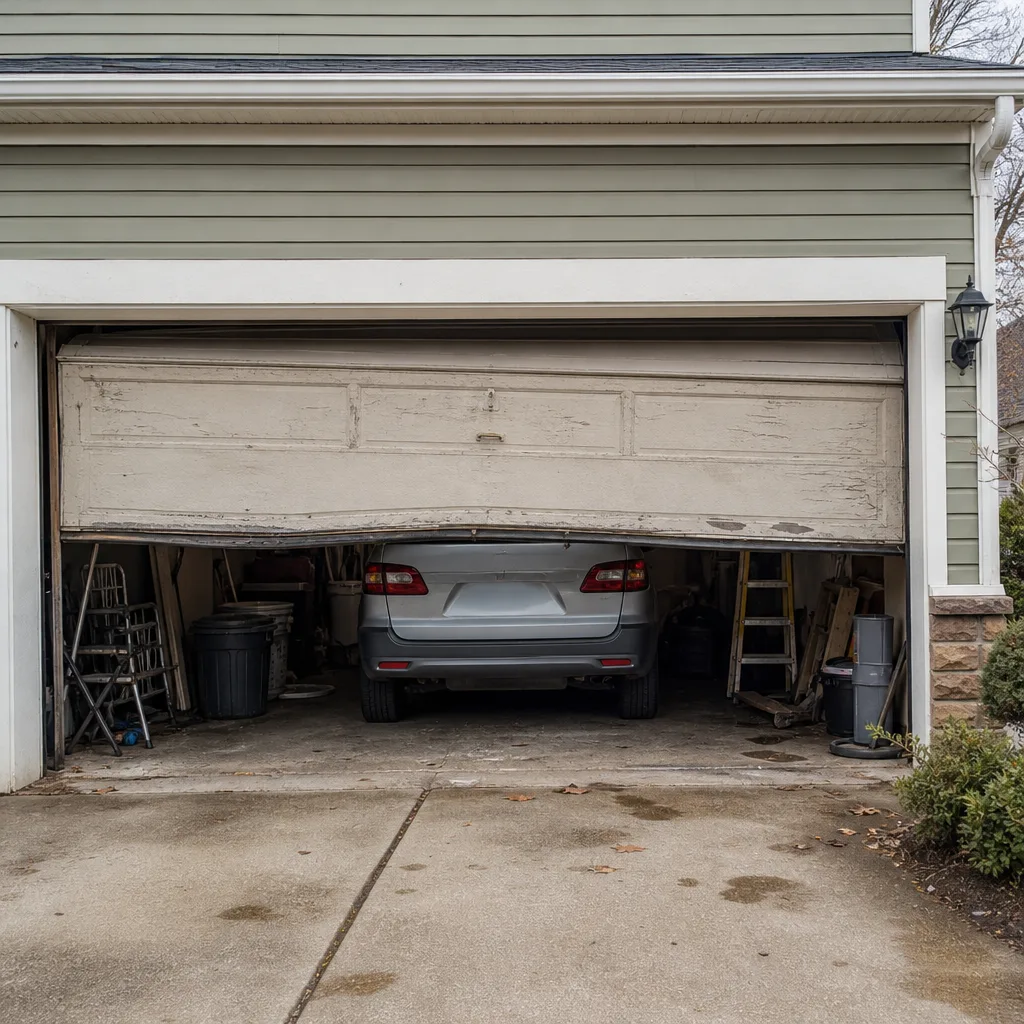
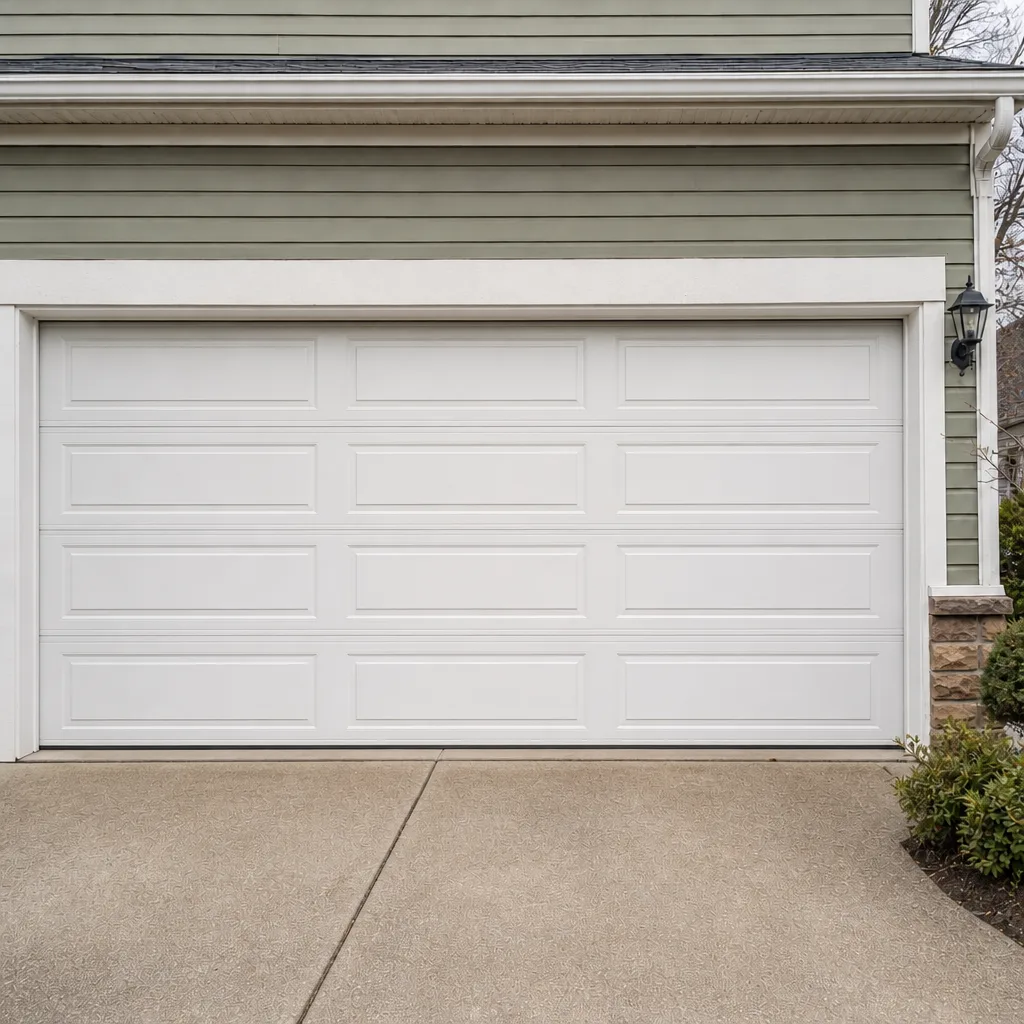
See the difference
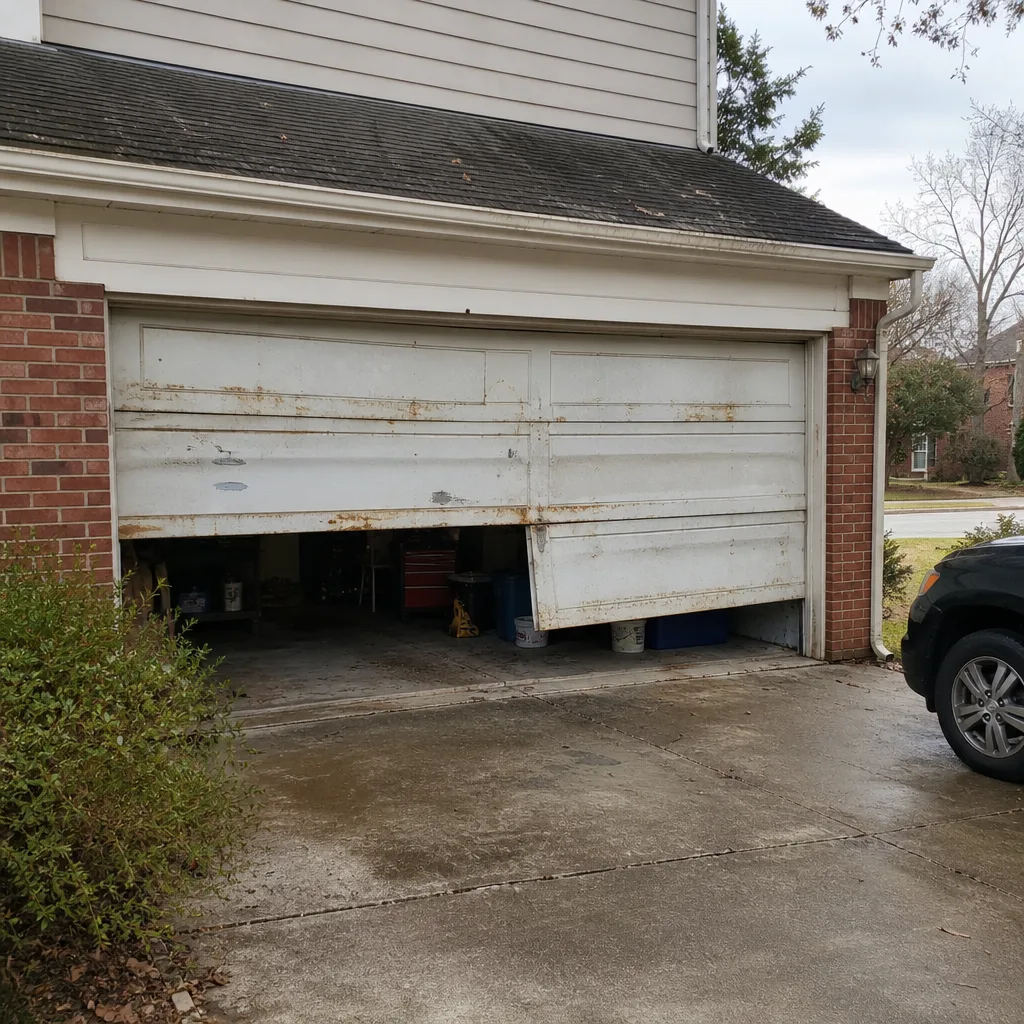 Before
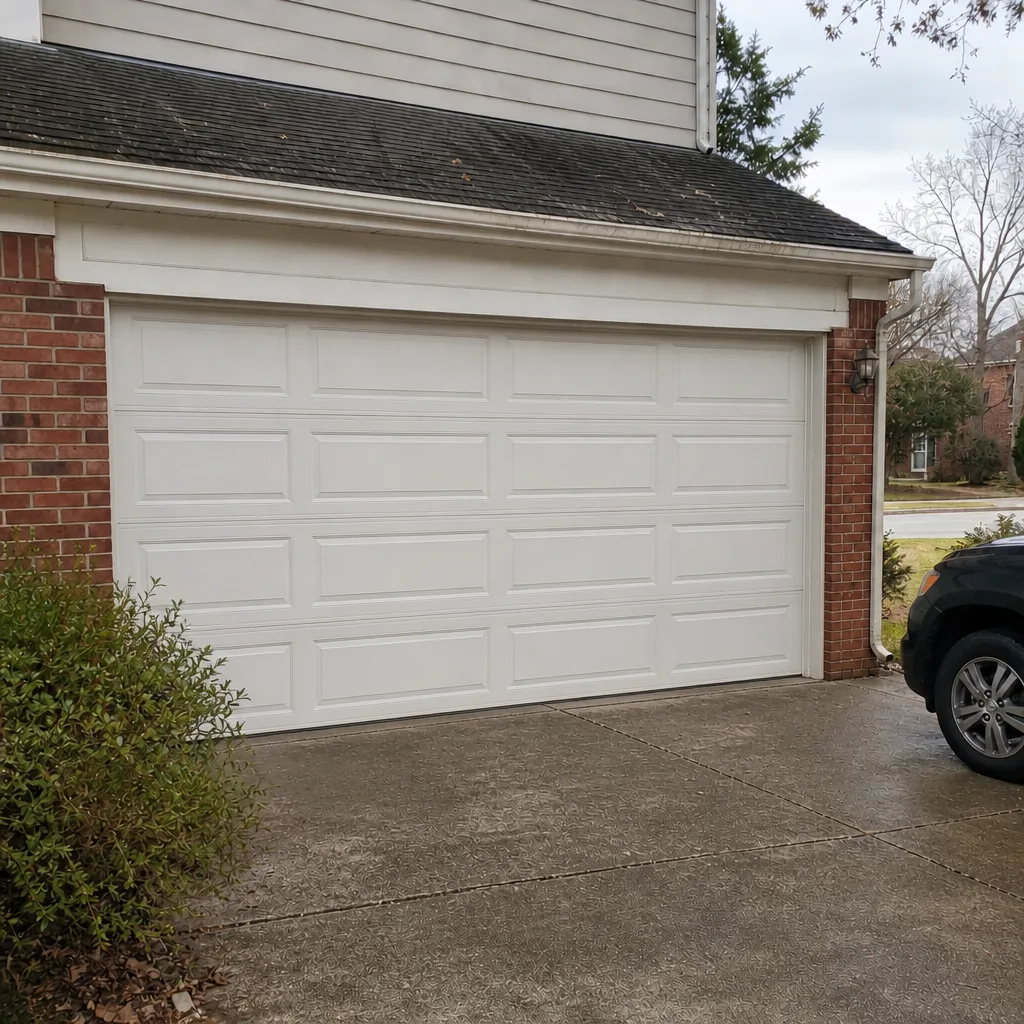 After
 Before
 After
 Before
 After
When to Call a Professional
Routine care and lubrication you can handle yourself. Spring replacement, a spring that’s lost tension, a door that’s come off its track, a snapped cable, a broken opener, or a bottom seal frozen solid after a cold snap all call for a trained technician. So does any job where the door is binding, no longer closes flush, or has visible structural movement in the frame. For wood doors that stick year-round, steel doors with rust creeping along the seams, or hardware that won’t stay tight no matter how often you torque it, it’s time to have a specialist look.
Ashburn Garage Door Repair Pros offers free estimates in Ashburn. Call (855) 658-3404 to schedule a seasonal check or get a problem looked at. We answer 24/7, and fast dispatch from 7am to 7pm, Sunday through Friday, gets a technician out to restore your door to service. Estimates are free, and the written quote sets the final price before any work starts.
Frequently Asked Questions
Lubricate moving parts twice a year, ideally in fall before the first freeze and again in spring. Fall is the more important of the two in Ashburn because cold thickens lubricant and loads the springs and opener, so getting a cold-rated lubricant in place before temperatures drop heads off the winter grinding that causes most November calls. Call (855) 658-3404 if the door still grinds after lubrication; estimates are free.
Your bottom seal is freezing to the concrete. Meltwater runs under the door, refreezes overnight, and bonds the rubber to the slab. Break the ice gently with warm water, never a shovel or hammer, and check that the seal makes full contact without pressing flat. If the seal is cracked or compressed, replace it before the next freeze. For help with a stuck door, call (855) 658-3404.
No. Torsion springs hold serious stored energy, and a spring that releases while someone is turning it can cause severe injury. Spring replacement is one of the most dangerous DIY repairs and belongs with a specialist. If you suspect a spring problem, call (855) 658-3404 and we’ll take a look; estimates are free.
If the door sticks only on humid days and frees up when the air dries, it’s cosmetic. If it sticks in dry weather too, or panels have separated or the frame has warped, the door has moved structurally and needs professional attention. Ashburn’s summers run humid enough that wood doors are worth checking every year. Call (855) 658-3404 for an assessment if you’re not sure.
Fall lubrication combined with an annual hardware torque check. Together they prevent most emergency service calls, because most failures trace back to loose bolts or dry hinges rather than worn-out doors. Twenty minutes with a socket set catches them before they turn into a door that won’t open. Call (855) 658-3404 to schedule a seasonal check; estimates are free.
Yes. Repair, installation, opener systems, and spring replacement are all handled by the same specialists, so one visit covers the door and the opener. We work on LiftMaster, Chamberlain, Genie, Craftsman, Clopay, Amarr, Wayne Dalton, and Raynor systems specifically. Call (855) 658-3404 and we’ll set up an estimate. We answer 24/7.
The Bottom Line
Seasonal care for an Ashburn garage door is about matching the task to the climate, not following a generic calendar. A fall lubrication with cold-rated product and a full hardware torque check prevents the November freeze-up that causes most calls. Winter calls for a clear, unfrozen bottom seal. Spring asks you to check spring tension and weatherstripping after the contraction-expansion cycle. Summer is about managing humidity on wood, steel, and fiberglass. Do the fall work and the annual torque check, and you’ll keep the door in service all year. When something crosses into repair, call the specialists at Ashburn Garage Door Repair Pros. Call (855) 658-3404 for a free estimate. We answer 24/7. Fast dispatch from 7am to 7pm, Sunday through Friday.
Written by the team at Ashburn Garage Door Repair Pros.