
Last updated November 23, 2026
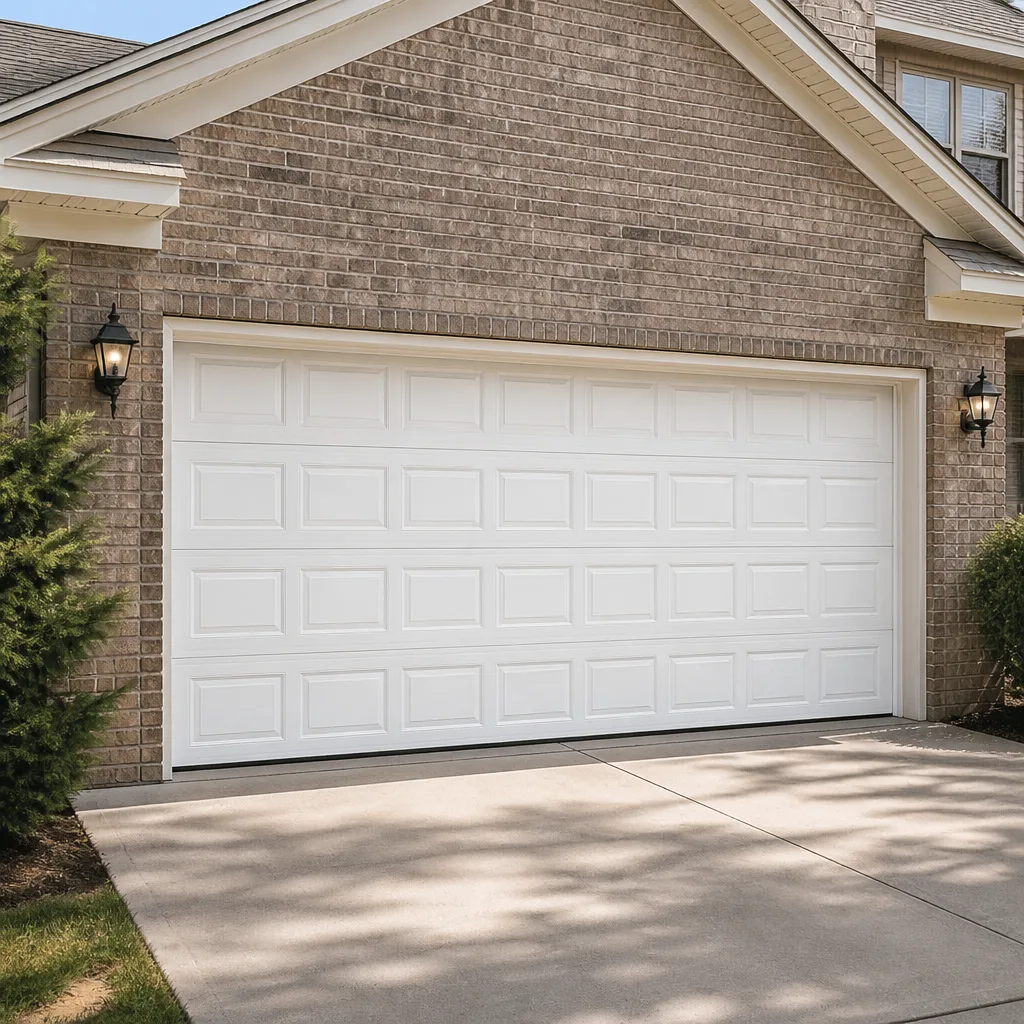 Raised-panel steel
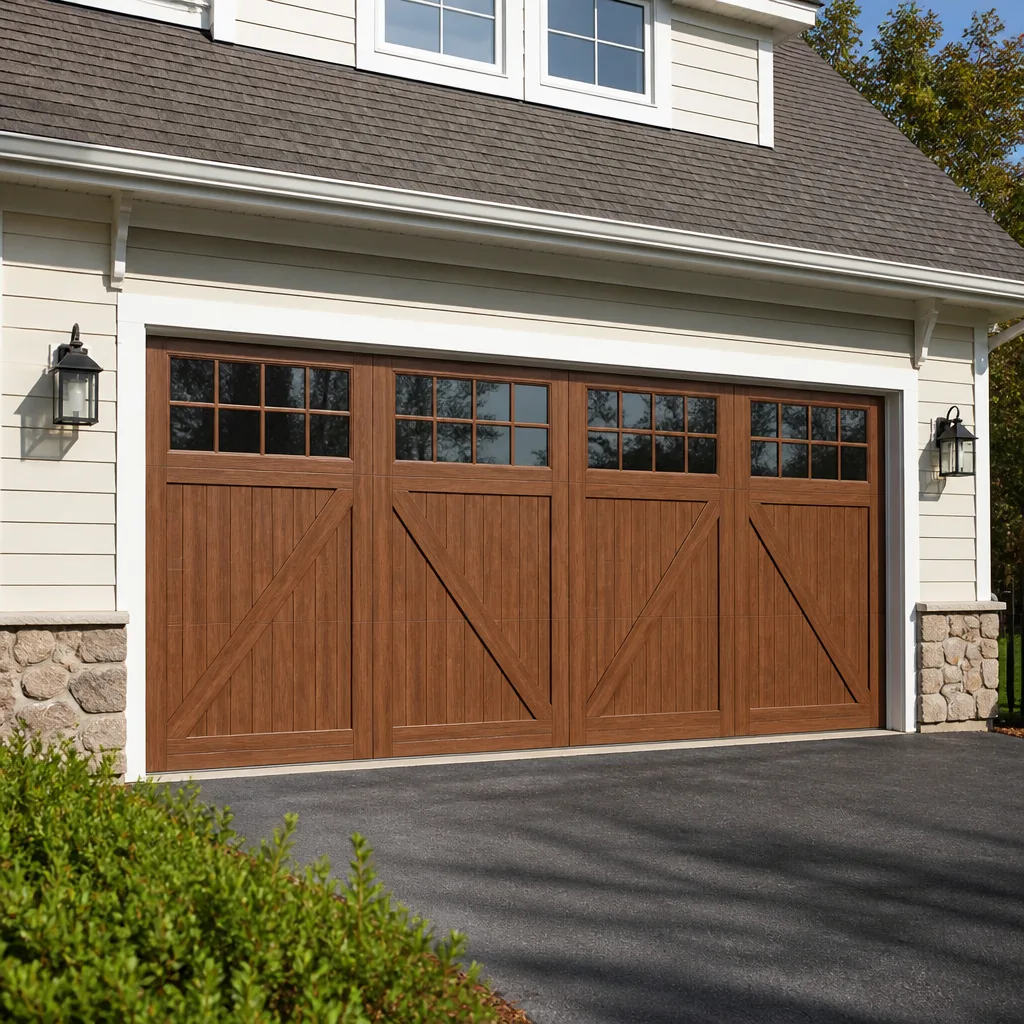 Carriage house
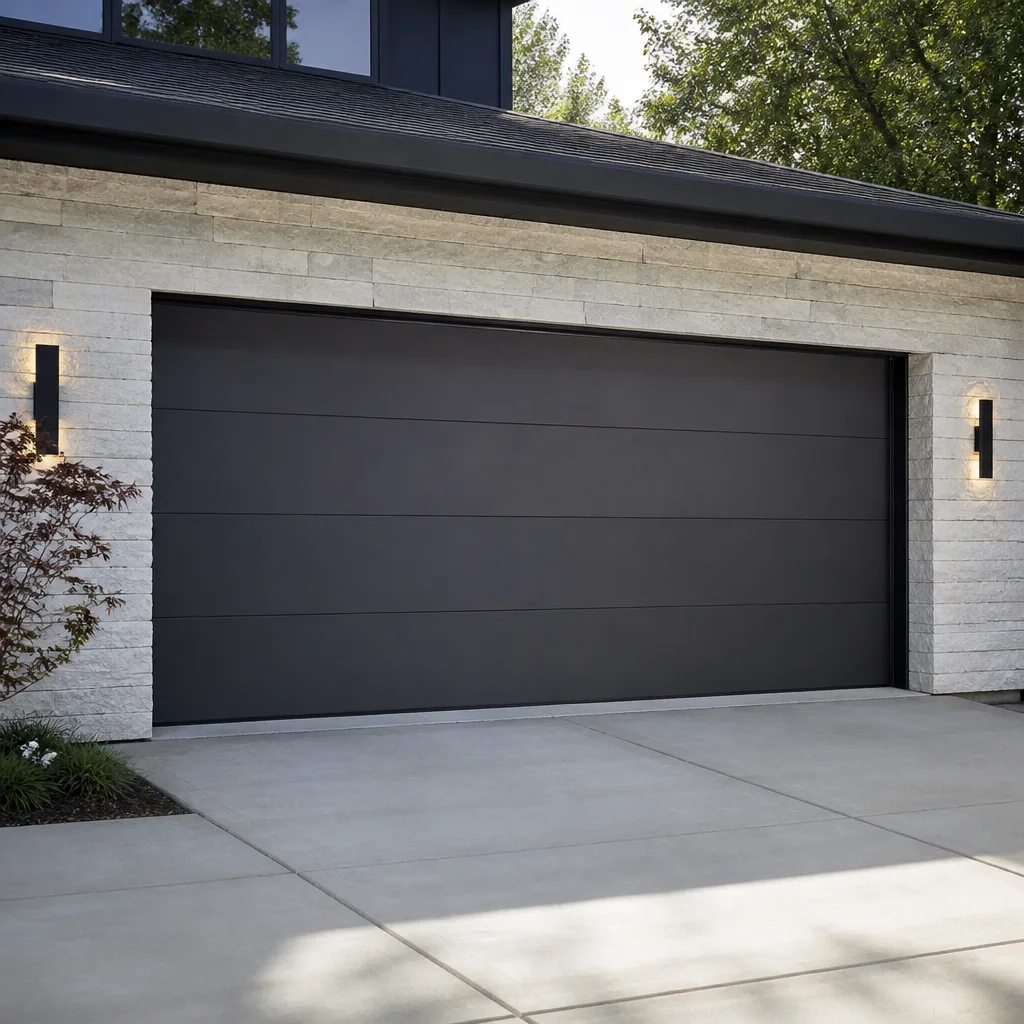 Modern flush
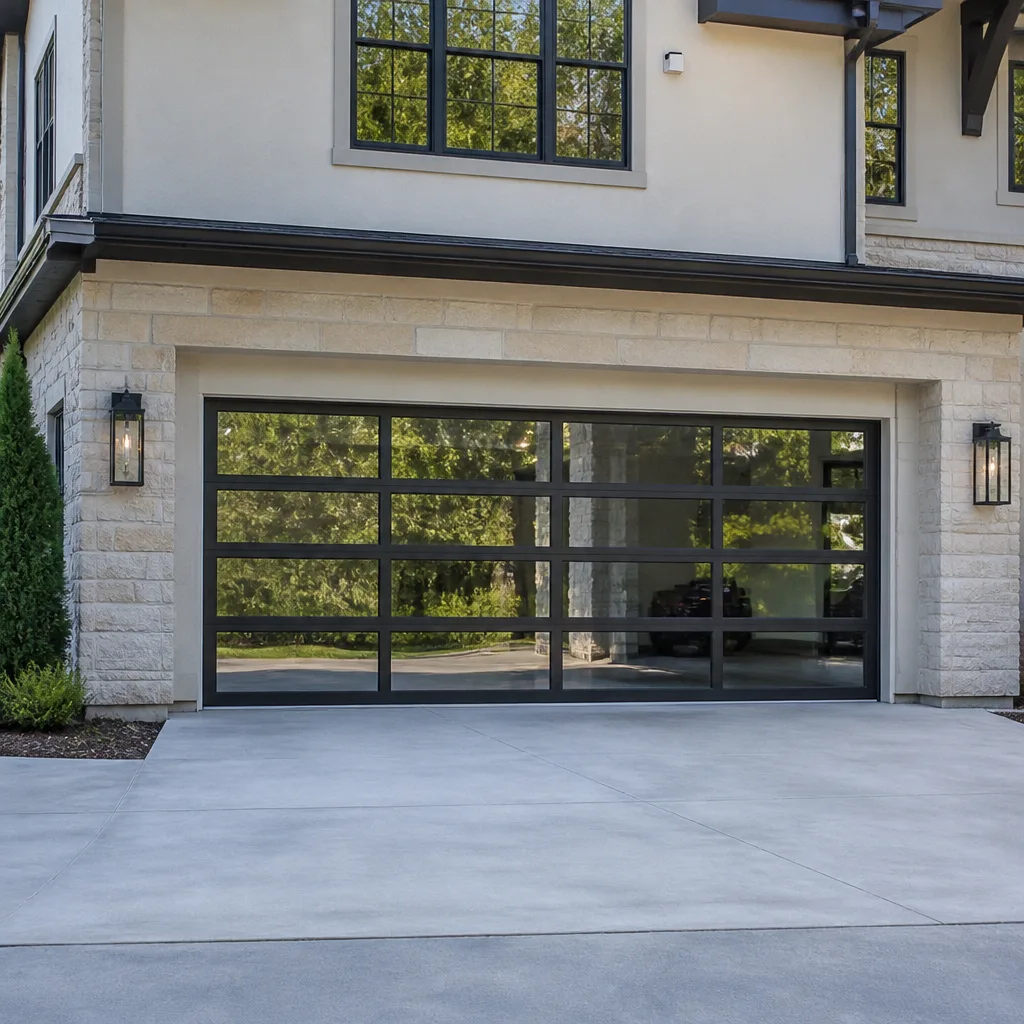 Full-view glass
 LiftMaster openers
 Chamberlain openers
Full 25-point door and opener safety check with every visit - springs, cables, rollers, tracks, and your LiftMaster or Chamberlain opener included
You get a price before we start. It does not change when the pro arrives.
Get your free estimateGarage Door Warning Signs: An Ashburn Homeowner’s Reference Guide
Most garage doors don’t fail without warning. They telegraph problems for weeks through sounds, movement patterns, and visual cues that are easy to miss if you don’t know what you’re listening for. The difference between a small roller replacement and a full track realignment is often just a couple of weeks and one ignored grinding noise. This guide is written to help Ashburn homeowners read those signals with enough specificity to describe the problem accurately to a technician, not just say “it sounds weird.” You’ll learn what each sound points to mechanically, which visual cues mean a spring is near failure, and a 30-second overnight test you can run yourself.
Quick Answer
The most reliable garage door warning signs are grinding or squealing during travel, a door that jerks or opens unevenly, popping sounds from the torsion bar, a visible gap or heavy rust in the spring coils, and an opener that stutters or reverses for no reason. Any one of these means the door needs professional eyes before it fails completely. In Ashburn, where summer humidity and winter freeze-thaw cycles work on metal parts all year, catching these signs early is the difference between a minor repair and a door that won’t open at all.
Styles & brands we work with
- Raised-panel steel
- Carriage house
- Modern flush
- Full-view glass
- LiftMaster openers
- Chamberlain openers
Table of Contents
- The Sound-to-Problem Diagnostic: What Each Noise Tells You
- Visual Warning Signs: Springs, Cables, and Hardware
- Movement Red Flags You Should Never Ignore
- Opener Behavior Changes That Signal Trouble Ahead
- The Overnight Test: A 30-Second Tension Check
- Why Ashburn Weather Accelerates Wear
- Brand-Specific Warning Signs: LiftMaster, Chamberlain, and More
- When to Call a Professional
The Sound-to-Problem Diagnostic: What Each Noise Tells You
Garage doors are mechanical systems with a predictable set of failure points, and each failure point makes a distinct sound. Learning to separate them is the single most useful diagnostic skill an Ashburn homeowner can develop. Here’s what each noise usually indicates.
Grinding. Grinding is metal-on-metal contact, and it almost always traces to worn rollers, dry or damaged bearings, or a bent track section where the roller is scraping instead of rolling. Left alone, grinding accelerates wear on the track itself, which turns a roller swap into a track replacement. If your door grinds at one specific point in its travel, that’s a strong sign of a localized track or roller problem rather than a whole-system issue.
Squealing. Squealing is high-pitched and rhythmic, and it points to friction between moving parts that should be lubricated or replaced: hinges, rollers, and the torsion tube. It’s often the earliest warning sign, and it’s the easiest to address before it causes secondary damage. A door that squeals consistently is telling you its hardware is dry or its rollers are nearing the end of their life.
Popping. A sharp pop from the torsion bar area is a serious signal. It usually means the torsion spring is under uneven load or has already begun to crack, and the pop is the coil shifting. Popping is the sound that precedes spring failure most often. Do not keep operating a door that pops.
Banging. Banging during operation means something is loose or out of balance: a hinge pulling free, a roller out of its track, or the door slamming at the end of its travel because the opener’s force settings or travel limits are off. Banging can also signal a torsion spring that has fully snapped and is no longer holding tension. If your door bangs on opening or closing, stop and call a technician.
Rattling. Rattling is usually loose hardware: bolts on hinges and brackets that have worked free over years of vibration. It’s rarely urgent on its own, but it’s worth tightening or having checked before a loose bracket drops a roller out of its track.
If you can describe which sound happens, when it happens (on opening, closing, or both), and where it comes from, you’ve given a technician most of what they need to pre-diagnose the problem. That’s the difference between a quick, targeted garage door repair and a longer diagnostic visit.
Visual Warning Signs: Springs, Cables, and Hardware
Sounds tell you what’s happening now. Visual cues tell you what’s about to happen. Springs and cables are the parts most worth inspecting from the ground, and they’re the parts most likely to fail catastrophically if ignored.
Spring wear
A torsion spring should be a tight, even coil of oiled metal. Look for a visible gap in the coil (even a small one means the spring is beginning to crack), a rust pattern that’s concentrated on one section rather than evenly distributed, and any sign of the spring stretching or sagging on the bar. Extensions springs should be inspected on the same principle: look for gaps, rust, and any stretching of the coil. Rust that’s heaviest in one spot means that section is absorbing more stress than the rest, which is where the fracture will start.
Cable tension
On the sides of the door, the lift cables should run evenly down both sides and tension should feel roughly symmetrical. A cable that hangs loose on one side, sits off its drum, or looks frayed is a serious warning. A frayed cable can snap, and a snapped cable lets the door drop. Never try to adjust, rewind, or tighten a cable yourself: cables are under extreme tension and belong to a trained professional.
Hardware
Walk around the door and look for loose hinges, brackets pulling away from the door panel, rollers that have worn flat spots, and any bent track. A track that’s visibly bowed or out of alignment will cause the door to bind. If you see a track separating from the door frame, stop using the door.
Spring replacement is one of the most dangerous DIY repairs in home maintenance. The torsion system stores enough energy to cause serious injury in an instant, and we handle it differently: with the proper winding bars, the right spring for the door’s weight, and a technician who does it every week. If you spot spring damage, don’t touch it. Call.
Movement Red Flags You Should Never Ignore
A garage door that moves correctly glides at a steady pace on both sides and stops cleanly at the top and bottom. Any deviation from that is not a quirk. It’s a symptom.
The door opens unevenly. If one side reaches the ceiling before the other, you have a tension imbalance: a failing spring, a stretched cable on one side, or a bent track. If the imbalance is in the springs, it will worsen quickly, and the door’s weight is no longer evenly distributed. Uneven opening is the most common precursor to a spring failure we see on older doors around Ashburn.
The door jerks during travel. Jerking means the door is binding somewhere: a worn roller, a misaligned track, or a hinge that’s sticking. It also loads the opener motor with more resistance than it’s designed for, which shortens the opener’s life.
The door reverses for no reason. If the door travels down and reverses back up with nothing in the way, the safety sensors are misaligned, the opener’s travel limits are off, or the logic board is behaving incorrectly. Reversing for no reason is a safety system doing its job badly, and it usually gets worse, not better.
The door drops too fast on closing. A door that slams shut has lost spring tension. This is a safety issue: a door with weak springs is heavier than the opener can safely manage, and it can crash down.
The door won’t close all the way. A door that stops short usually has a misadjusted travel limit or a sensor problem. It can also mean a small obstruction on the track. Either way, an unclosed door in Ashburn leaves the garage open to weather and intrusion.
What each of these patterns points to is a mechanical system out of balance. It won’t fix itself. In our experience, homeowners who describe the movement pattern precisely (“the left side lags by about four inches and it jerks at the halfway point”) save a step in diagnosis and often get the right part on the first visit.
Opener Behavior Changes That Signal Trouble Ahead
Your opener is a motor, a capacitor, a logic board, and a set of safety sensors working together. Each of those components degrades in a way that shows up as a behavioral change before the opener dies outright. Reading those changes is how you avoid a morning where the door simply doesn’t respond.
- Stuttering or hesitating on start. A stutter usually points to a failing start capacitor or a motor that’s straining against a binding door. If the door itself moves freely by hand, the opener is the likely culprit.
- Clicking but not moving. A single click with no movement means the opener is getting power but the motor or capacitor isn’t turning it. This is a classic failing-capacitor symptom.
- Lights on, nothing happens. If the opener’s lights work but the door won’t move and the wall button is unresponsive, suspect the logic board or a wiring fault.
- Remotes and keypads get unreliable. Remote range dropping, keypads requiring multiple tries, or a wall button that only works intermittently point to a logic board or antenna issue. Sometimes it’s as simple as a failing battery, but if fresh batteries don’t fix it, the opener’s electronics are aging.
- Beeping and lights flashing during closing. On newer openers, this is the safety-reverse feature under load or a misaligned sensor. It’s a warning, not a nuisance.
- The door opens partway and stops. On a smart opener, this can be a travel limit or a sensor problem. It can also mean the door is binding, and the opener is hitting its force limit and stopping as a protective measure.
If your opener is a LiftMaster, Chamberlain, Genie, or Craftsman unit, its specific error codes and light patterns mean specific things, and a technician familiar with that brand reads them the way you’d read a check-engine light. We work on those systems specifically, which is why garage door opener repair doesn’t start from zero on a brand we know.
The Overnight Test: A 30-Second Tension Check
Here’s a simple visual check you can do in about 30 seconds that will catch a tension imbalance before it becomes a service call. Do it when the door is at rest, ideally first thing in the morning or after the door has sat closed for a while.
- Look at the gap under the door. Stand inside the garage and look along the bottom edge where it meets the floor. The gap should be a consistent, thin line across the whole width. If one side sits higher off the floor than the other, you have a tension imbalance. A door that meets the floor more heavily on one side is being pulled harder on the other.
- Check the door’s alignment against its opening. Look at the vertical gap between the door’s edges and the frame on both sides. If the door is sitting closer to one side of the frame than the other, the tracks or springs are pulling it off-center.
- Look along the top edge for level. With the door closed, the top panel should be level across its width. A top edge that’s visibly tilted toward one side is the clearest evidence of uneven spring tension.
- Glance at both spring coils. Both torsion springs on a two-spring door should look identical in coil spacing and rust distribution. If one looks compressed or rustier than its partner, that spring is carrying more load and will fail first.
- Watch the door open once, from outside, from a safe distance. You’re looking for whether the door rises straight and evenly. Any lean, wobble, or speed difference between sides confirms a tension problem.
This test doesn’t fix anything and it isn’t a substitute for a technician. What it does is give you an early warning. An overnight test that shows imbalance is the moment to pick up the phone, not a week later when the door stops working in your driveway. On a door with a torsion spring system, never try to adjust the springs yourself: the stored energy makes this one of the most dangerous repairs a homeowner can attempt.
Why Ashburn Weather Accelerates Wear
Ashburn’s climate is hard on garage door hardware in ways that are specific to the area. The region gets hot, humid summers and cold winters with enough freeze-thaw cycling to work metal parts constantly. That cycle is exactly what accelerates spring fatigue, cable wear, and track movement.
In summer, humidity settles into the garage and promotes rust on springs and cables, especially on doors that face west or sit on a slab that holds moisture. Rust is where springs crack. In winter, the freeze-thaw cycle causes the concrete slab and door frame to move slightly, which puts stress on the track alignment and can cause a door that was running smoothly in October to start binding in January. Doors on homes with a longer, hilly driveway or a grade that directs water toward the garage tend to see more moisture-related wear on the bottom panel and hardware.
That’s why local technicians see a wave of spring and alignment problems on Ashburn doors after a cold snap, and a wave of roller and track complaints when the summer heat and humidity peak. The warning signs are the same all year, but the seasonal pattern is worth knowing: if the door starts making noise right after a hard freeze or a streak of humid weather, the climate is likely part of the cause.
Brand-Specific Warning Signs: LiftMaster, Chamberlain, and More
Garage doors and openers from different manufacturers fail in slightly different ways, and a technician who knows a brand’s patterns diagnoses by brand logic rather than guesswork. Here’s what to watch for on some of the most common systems in Ashburn.
- LiftMaster openers. Watch for the wall control showing error codes, the opener’s light flashing in a specific pattern, or the safety-reverse feature kicking in under load. LiftMaster’s diagnostic light codes are unusually specific, and a technician reads them directly.
- Chamberlain openers. Chamberlain units often signal a failing capacitor with a click but no movement, and their logic boards can show remote-range issues before they fail outright. If your Chamberlain remote gets unreliable but fresh batteries don’t help, it’s worth a diagnostic.
- Genie openers. Genie units are known for travel-limit and force-setting issues as they age, and a door that stops partway is often a setting problem rather than a motor failure.
- Craftsman openers. Craftsman systems often show wear in the drive gear and the wall console, and the “clicking but not moving” pattern is common when the gear assembly is nearing the end of its life.
- Clopay, Amarr, Wayne Dalton, and Raynor doors. On the door itself, manufacturer-specific hardware (rollers, hinges, and spring sizes) matters for fit, so knowing the door’s brand helps a technician match the right replacement part.
When the diagnosis is a system at the end of its life, a new installation or opener replacement is often the better call than repeated repairs. Our garage door installation work covers matched springs, tracks, and opener systems from the brands we know, measured and fitted to the opening rather than guessed at. If you’re weighing repair against replacement, the warning signs in this guide are the same ones a technician uses to make that recommendation.
See the difference
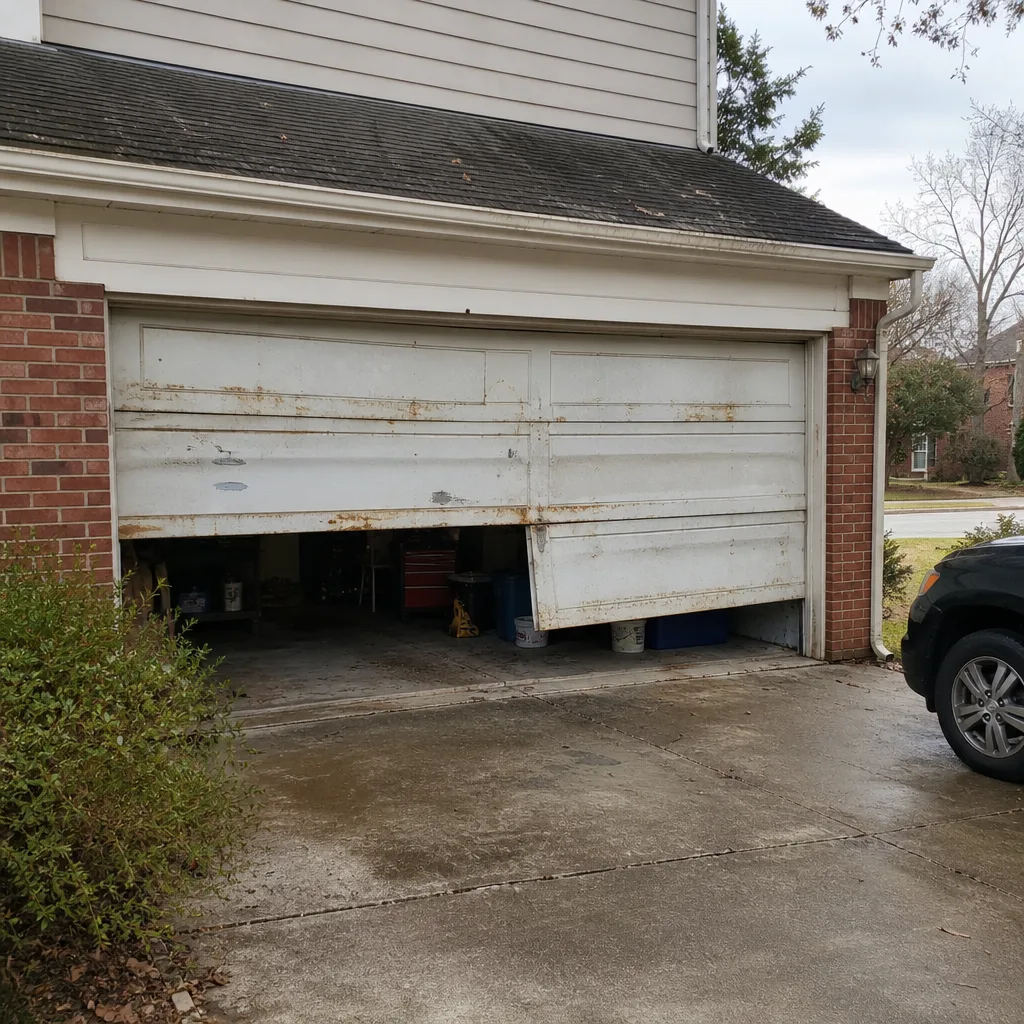 Before
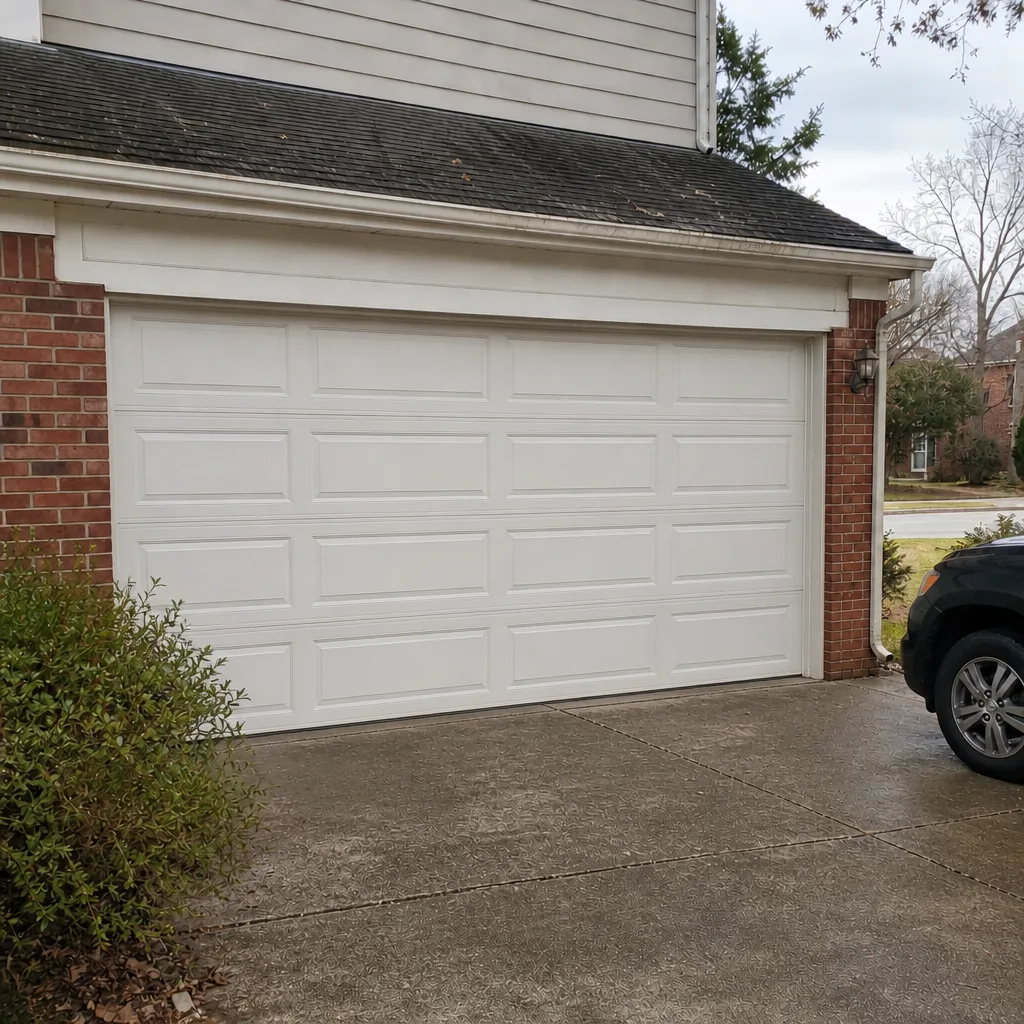 After
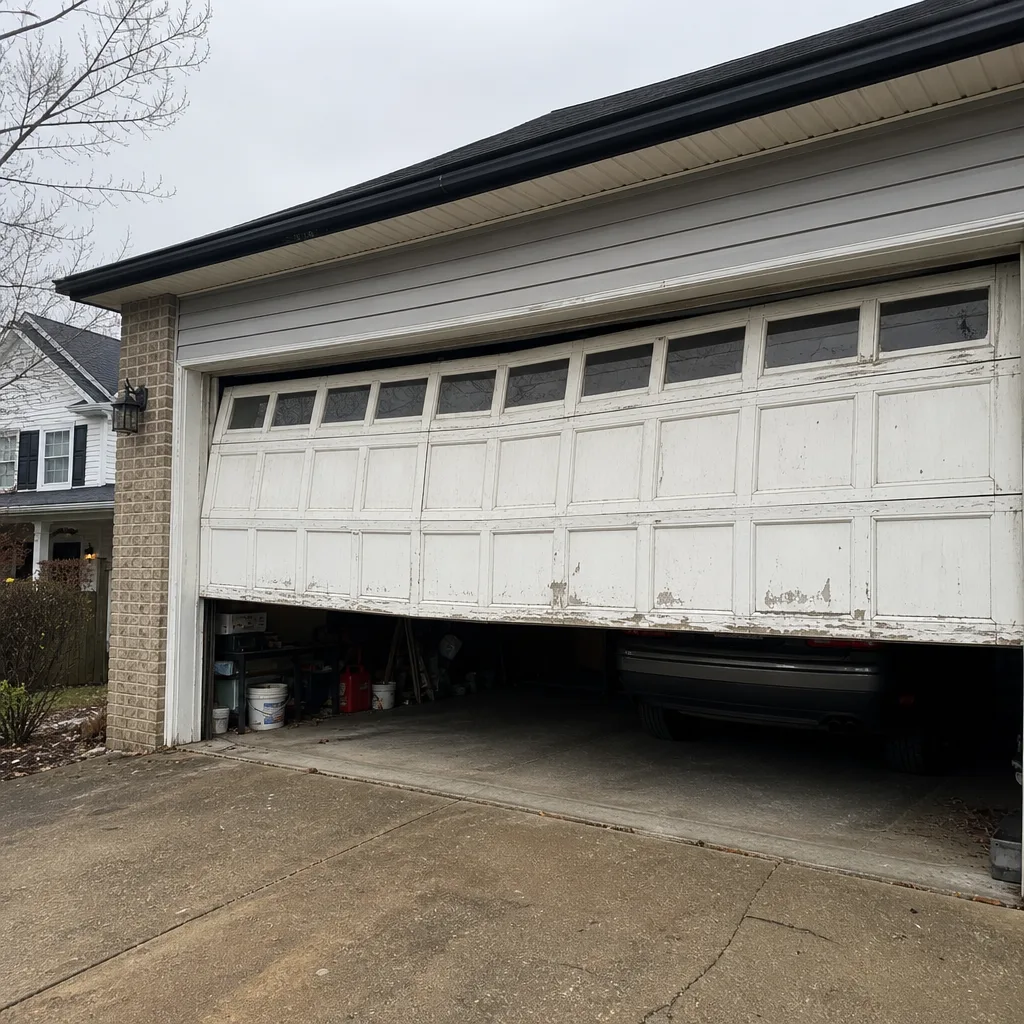 Before
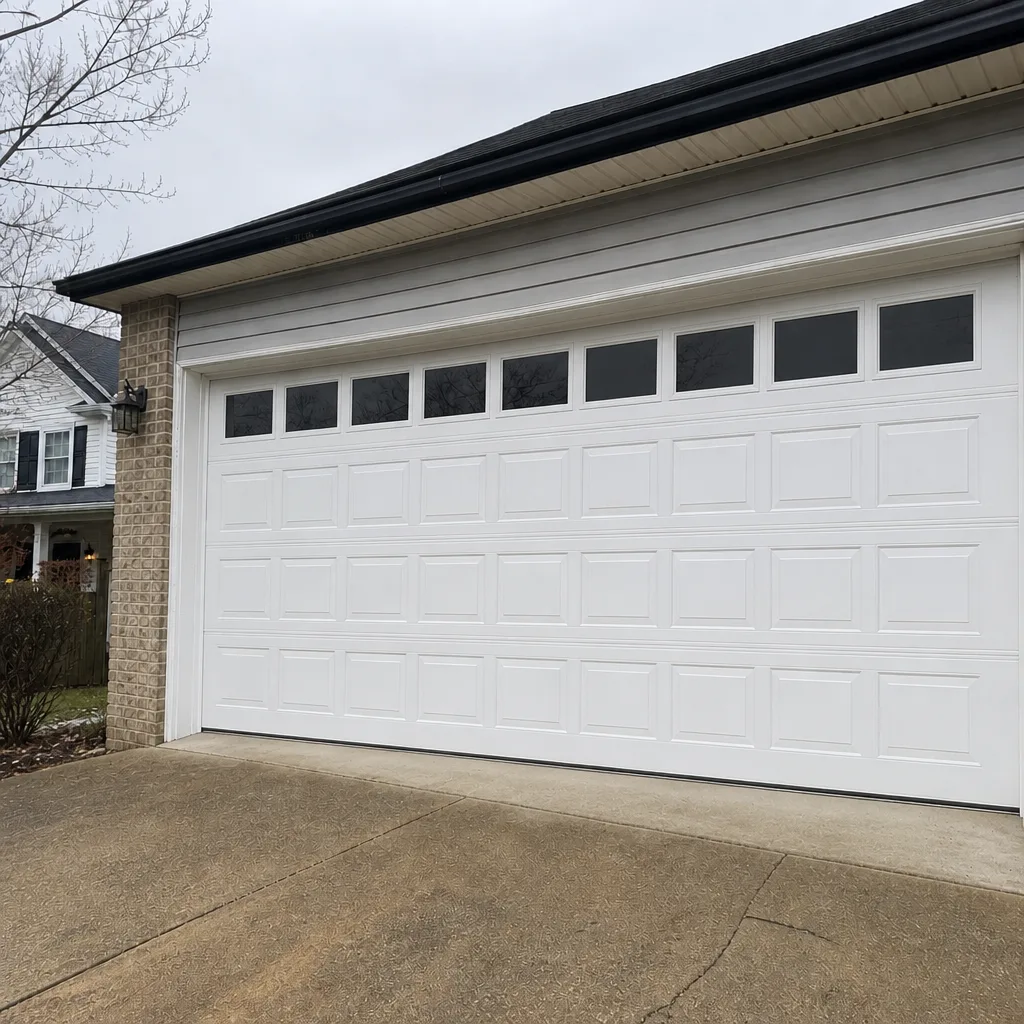 After
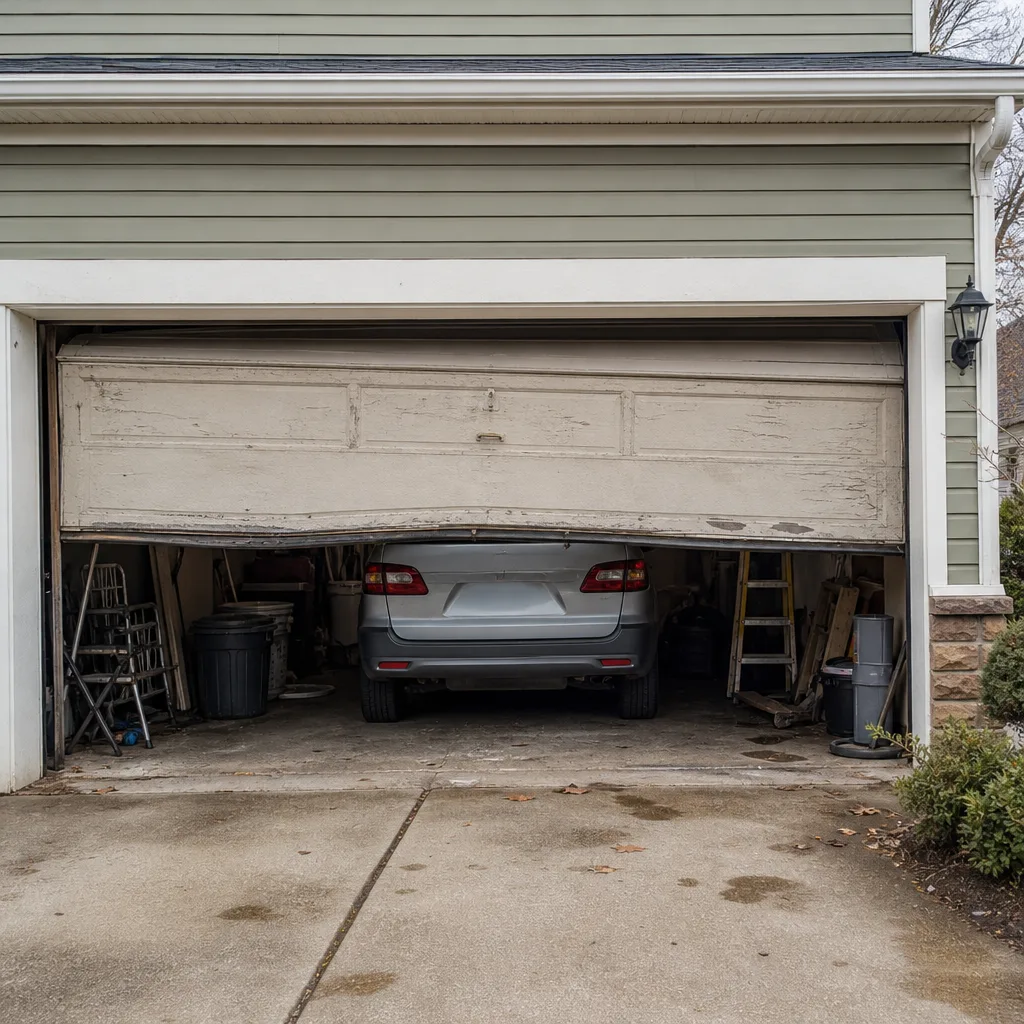 Before
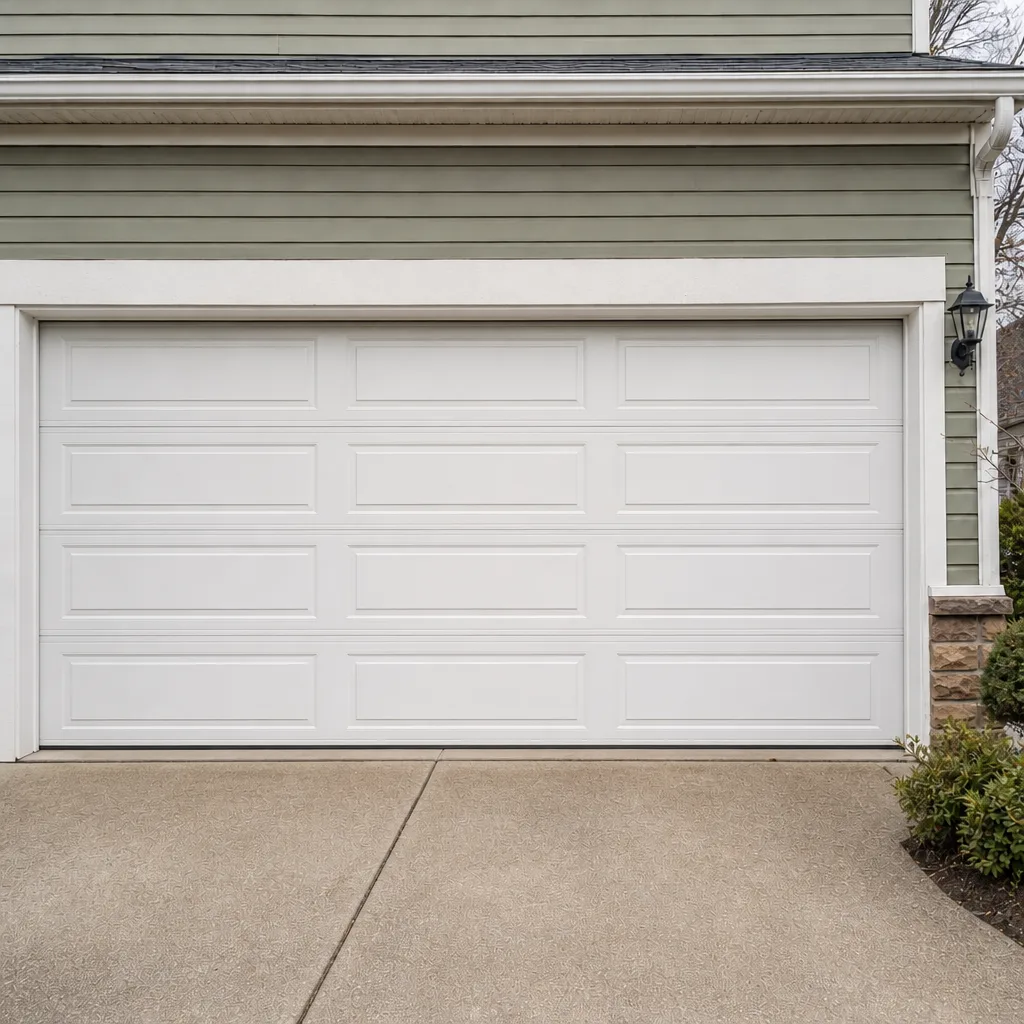 After
Common Mistakes to Avoid
- Ignoring a noise for “one more month.” Grinding and squealing are early warnings, and the cost of a small roller or lubrication job is far less than the track replacement that follows if it’s ignored.
- Trying to fix springs or cables yourself. Torsion springs store enough energy to cause serious injury, and a cable under tension can snap. This is never a DIY job, no matter how many videos you’ve watched.
- Oil or grease on the tracks. Lubricant on the track attracts dirt and can cause the rollers to slide instead of roll, which damages the track. Tracks stay dry; rollers get the lubrication.
- Forcing a door that’s binding. Pushing a binding door past its resistance stresses the opener motor and the panels. If the door won’t move freely by hand, stop and call a technician.
- Turning up the opener’s force setting to mask a problem. Raising the force setting pushes the motor harder to overcome a binding door, which hides the real issue and accelerates wear on the opener.
- Assuming the warning signs are the same on every door. A Clopay door, a LiftMaster opener, and a Raynor door each have their own wear patterns. A specialist who knows the brand matches the right parts the first time.
- Waiting for the door to stop working before calling. The whole point of a warning sign is that it happens before the failure. A door that fails while you’re away or while your car is parked inside leaves you with a real problem, not just a service call.
When to Call a Professional
Call a professional if you see any of the following: a popping sound from the torsion bar, a visible gap or heavy rust in the spring coils, a door that opens unevenly or jerks, a door that reverses for no reason, a frayed or loose cable, or an opener that clicks without moving. Each of those points to a precision part under tension, and each is more safely and correctly handled by a trained professional. You don’t need to wait for the door to fail completely. A free estimate today is the cheapest part of this entire problem. Ashburn Garage Door Repair Pros offers free estimates in Ashburn and can work with LiftMaster, Chamberlain, Genie, Clopay, Amarr, Wayne Dalton, Craftsman, and Raynor systems. Call (855) 658-3404 and describe the sound, the movement, and what you see. We answer 24/7. Fast dispatch from 7am to 7pm, Sunday through Friday, and the price is agreed in writing before any work starts.
Frequently Asked Questions
A visible gap in the coil or a rusty section on the spring is the earliest reliable sign, and it’s usually accompanied by a popping sound from the torsion bar. If the door feels heavier than usual to lift by hand or the opener is working harder, the spring has already started to lose tension. Don’t open the door again until a technician looks at it, and call (855) 658-3404 for a free estimate.
You shouldn’t wait. Grinding means metal is scraping where it should roll, and every cycle wears the track and the roller further. A roller or lubrication job is a fraction of the cost of the track replacement that follows. Call (855) 658-3404 for an exact quote, and estimates are free.
Yes, if the problem is a repair, we can usually get a technician out the same day. We answer 24/7, and a call outside dispatch hours is booked into the next opening, Sunday through Friday, 7am to 7pm. Call (855) 658-3404.
No. The written estimate sets the final price, and the price is quoted and agreed before any work starts. If the technician finds a different problem than we expected, we explain it and get your agreement before proceeding. Call (855) 658-3404 for a free estimate.
The local pro we connect you with is licensed and insured as their state requires. Our technicians have up to 12 years of experience, and they work on LiftMaster, Chamberlain, Genie, Clopay, Amarr, Wayne Dalton, Craftsman, and Raynor systems specifically. Call (855) 658-3404 for a free estimate.
Spring repair is priced per job by the written estimate, so the exact cost depends on the door and which spring is involved. A single torsion spring is one part, and a matched pair is usually replaced together, so a pair costs about twice a single spring. Call (855) 658-3404 for a free estimate, and ask about our Ashburn Garage Door Repair Pros for any warning sign you’ve spotted.
The Bottom Line
Garage doors give you weeks of warning before they fail, and the signs are consistent: grinding that points to rollers and track, squealing that points to dry hardware, popping that points to springs, uneven movement that points to tension imbalance, and opener changes that point to electronics aging out. In Ashburn, humidity and freeze-thaw cycling speed up all of it, which is why the local connection between weather and wear is worth knowing. The overnight test gives you a 30-second way to catch imbalance before it becomes a failure. When you spot any of these signs, describe the sound and the movement pattern, and call (855) 658-3404 for a free estimate.
Written by the team at Ashburn Garage Door Repair Pros.